Drug Harm Reduction — Evidence-Based Safety
Practical information to reduce risks associated with drug use. This site accepts that people use substances and focuses on keeping them alive, informed, and connected to help. All content is informational only.
Naloxone
Reverses opioid overdose when administered promptly. Carry it if you or anyone near you uses opioids.
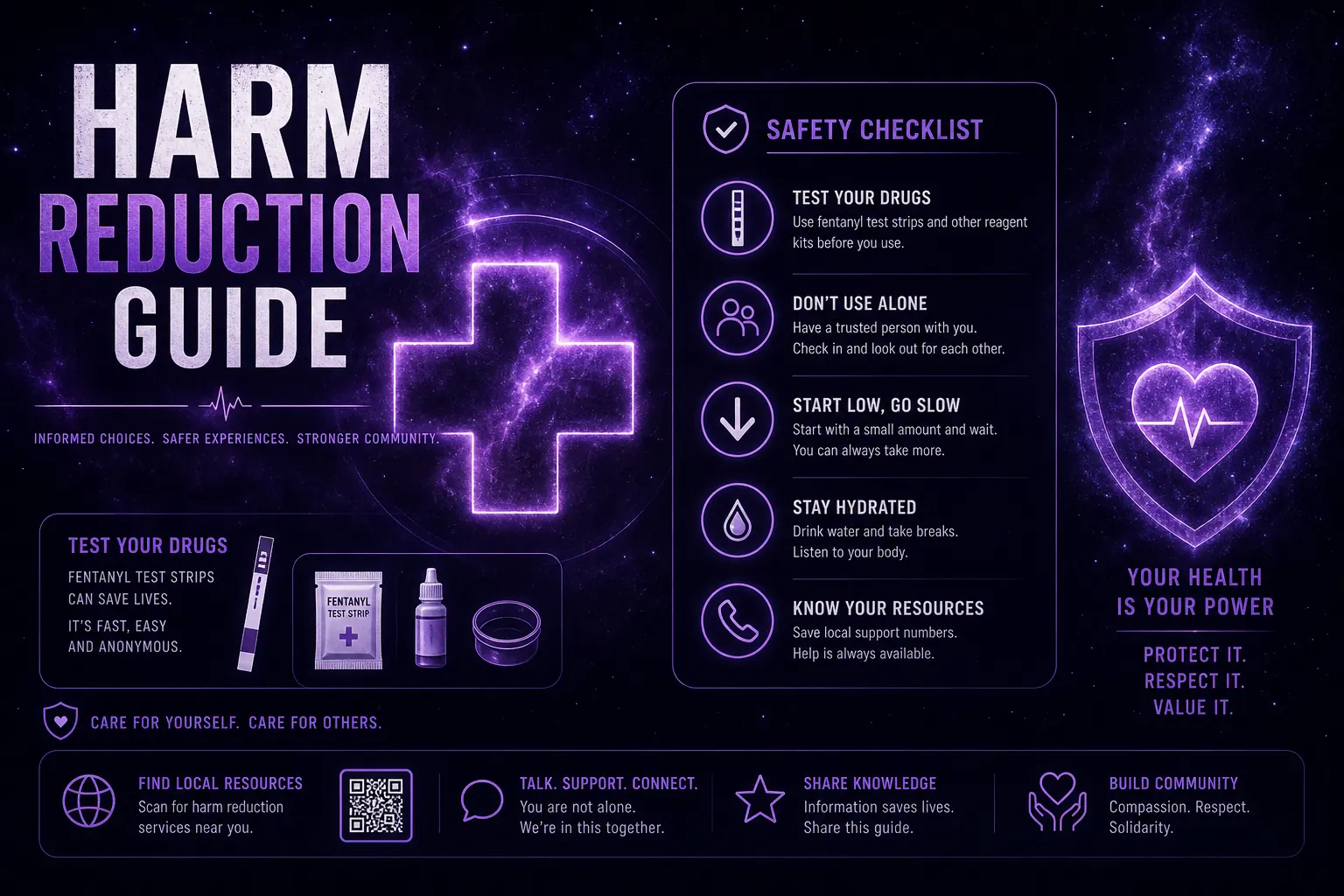
Test Before Use
Reagent kits and fentanyl strips detect adulterants before consumption. Testing guide
Never Use Alone
Have a sober person present or use a never-use-alone hotline. Find support
Start Low, Go Slow
Begin with a fraction of an expected dose when trying a new batch or substance.
What Does This Guide Cover?
Overdose Response
Recognize opioid, stimulant, and depressant overdose. Step-by-step naloxone administration and emergency actions.
Substance Profiles
Risk levels, dangerous combinations, and harm reduction tips for opioids, stimulants, psychedelics, and more.
Drug Testing
How reagent kits and fentanyl test strips work, where to obtain them, and how to interpret results.
Resources & Crisis Help
Hotlines, treatment locators, peer support networks, and trusted external organizations.
Universal Harm Reduction Principles
- Start low, go slow. Assess potency with a small test dose before full use.
- Never use alone. Inform someone of your location and what you are taking.
- Test your substances. Fentanyl and other adulterants appear across many drug categories.
- Know your interactions. Check combinations at TripSit Combo Chart.
- Have naloxone available. Anyone near opioid use should carry naloxone and know how to use it.